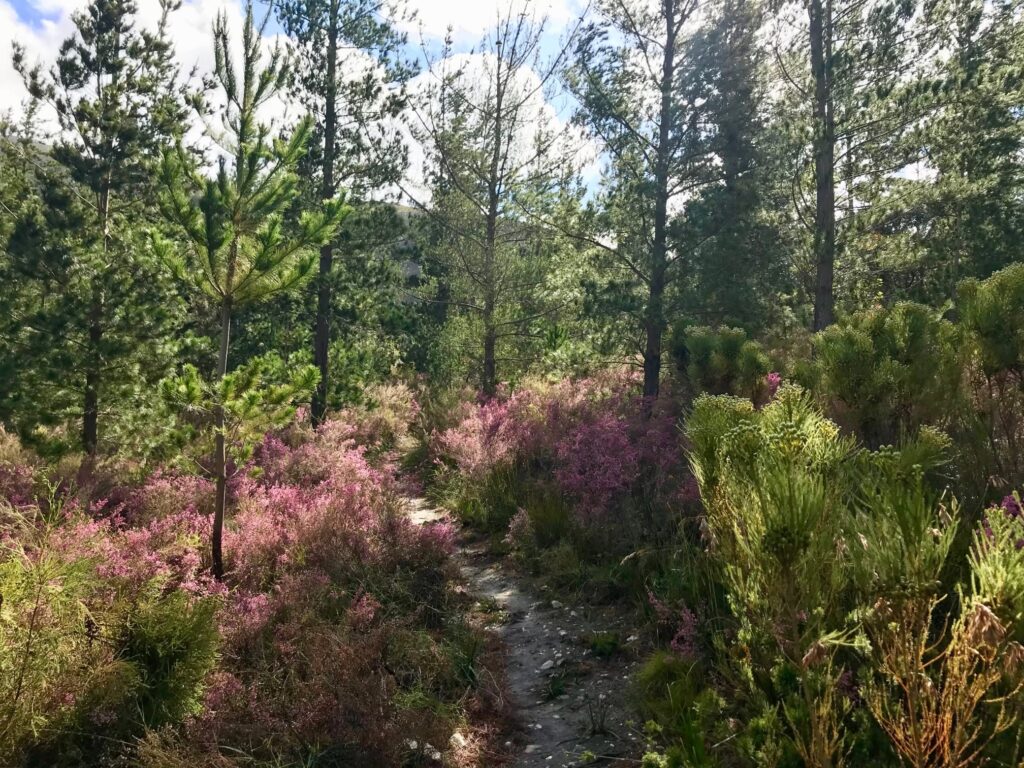
Restoring !Xairu: Eradicating alien invasives to bring back Suurbraak’s ancient fynbos and critically endangered renosterveld.
Saving the world’s rarest flora, right here in Suurbraak.
Native Cape is a locally led conservation initiative in Suurbraak, at the foot of the Langeberg. We love these mountains and the extraordinary life they hold, from flowering proteas to the small creatures moving quietly beneath them.
Watching invasive plants spread across the slopes has made us want to act. We’re raising funds to clear them, help indigenous habitats recover and protect the wildlife that depends on them.
Help bring back the fynbos – and the life it supports
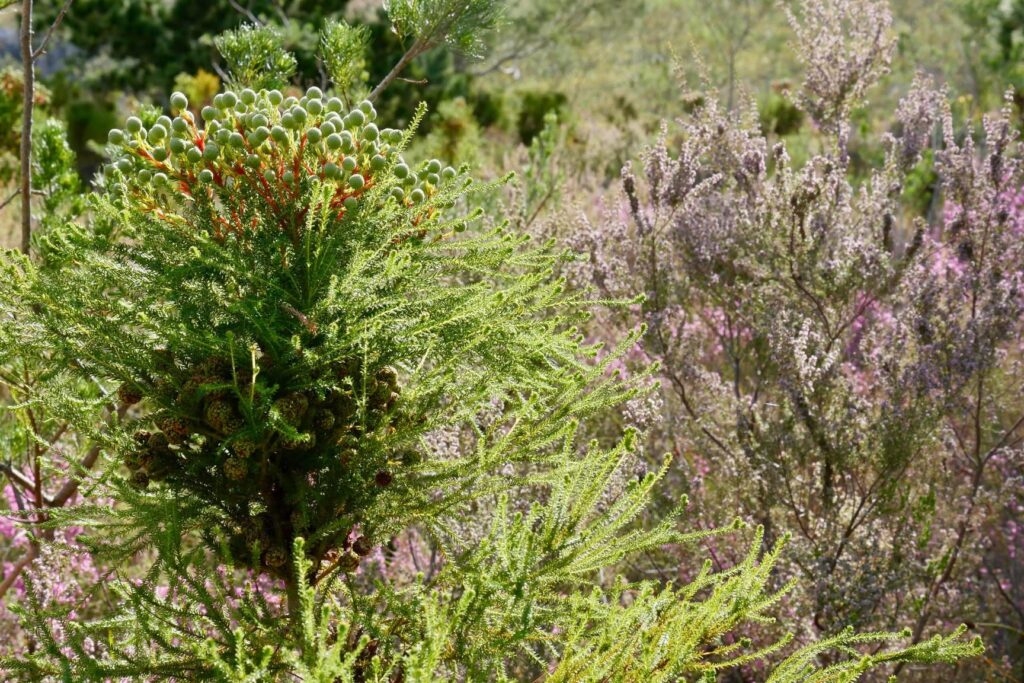
A landscape worth protecting
Our mountain slopes, foothills and river corridors form part of the Cape’s extraordinary natural heritage. Across the Langeberg Complex, CapeNature records 19 vegetation types—a reminder of how much variety there is to protect. We sit at the intersection between rare ecosystems:
- Eastern Rûens Shale Renosterveld: This is the highly threatened, fertile lowland vegetation that runs right up through the undulating plains and foothills surrounding Suurbraak.
- Langeberg Quartzite Fynbos: This is the resilient, mountain-dwelling fynbos that carpets the rocky sandstone heights right behind the village.
- Cape Lowland Alluvial Vegetation: Found along the paths of the Grootvadersbosch River system, which flows through the heart of Suurbraak.
Why we’re starting with black wattle
As black wattle spreads, dense stands can replace diverse indigenous vegetation. The effects reach beyond the trees we can see.
Less water for the catchment
Dense wattle stands can use more water than the vegetation they replace, reducing the water available to streams and rivers. Water use can be particularly high along watercourses, where roots have a dependable supply.
Less room for indigenous life
Fast-growing thickets crowd and shade out native plants, changing the food sources and shelter available to wildlife.
Changes beneath our feet
Black wattle adds nitrogen to the soil and can alter its acidity. These changes can make restoring the original plant community more difficult.
More fuel for destructive fires
Dense woody growth and accumulated dead material can increase fuel loads and make wildfires harder to manage. Clearing needs careful planning too, including how cut material is handled.
Seeds that can outlast a generation
Black wattle seeds can remain viable in the soil for more than 50 years. Fire can trigger a flush of germination, bringing new seedlings up after mature trees are gone.
That’s why our commitment includes returning to cleared areas, controlling regrowth and giving indigenous vegetation time to recover.
We also plan to tackle other confirmed invasive plants, including lantana and bugweed.
‘The world is not a problem to be solved; it is a living being to which we belong. The world is part of our own self and we are a part of its suffering wholeness. Until we go to the root of our image of separateness, there can be no healing. And the deepest part of our separateness from creation lies in our forgetfulness of its sacred nature, which is also our own sacred nature.’
Llewellyn Vaughan-Lee, ‘Spiritual Ecology: The Cry of the Earth’, 2013
What your support will help us do
Clear and restore
Remove invasive plants, control regrowth and monitor habitat recovery around Suurbraak, the mountain foothills and the Buffeljags River.
Observe and protect wildlife
Use trail cameras to document wildlife and install suitable bat and owl boxes where appropriate. Longer term, we hope to develop bird and wildlife rehabilitation as our capacity and approvals allow.
Share and involve
Create educational videos, organise volunteer activities, offer nature walks and involve local schools in discovering and protecting their natural heritage.
Create local opportunities
Work towards ongoing employment for villagers. Explore safe uses for cleared material, including mulch for fundraising or community food gardens, with precautions to prevent invasive seeds from spreading.
Plan for lasting recovery
Coordinate with landowners and conservation authorities, explore appropriate firebreaks, and seek agreement with the CPA to extend restoration onto its land.
Our activities will develop in stages, with the necessary landowner consent, registrations, permits and approvals in place before work that requires them begins.
Where we are now
We’re in our establishment phase: preparing registration applications, opening conversations with the municipality and CapeNature, and identifying suitable sites and the permissions needed to work on them.
Early support helps fund this preparation, alongside equipment, planning and the people coordinating the project. It gives us the foundations to begin responsibly and keep going.
Latest progress: a dated paragraph showing what stage we’re at, updated quarterly.
Give the work time to take root
Lasting restoration takes repeated visits, practical skills and patience.
Your donation will help fund the people doing the work, tools, protective equipment, follow-up clearing, wildlife monitoring and the costs of running Native Cape.
We’ll share progress through videos, before-and-after records and clear financial updates, so you can see what your contribution is making possible.
Make a once-off gift, become a regular supporter, or contribute useful equipment and expertise.
[Support the work] [Offer your help]
Follow the recovery
We’re preparing to share the project on YouTube—from the first site assessments and clearing days to the plants and animals we encounter along the way.
Our planned Patreon page will offer a way to support the work regularly. We’ll add links here when the channels are ready, alongside short quarterly progress updates.
[Our Story & Approach] [Our supporters] [Contact us]
Native Cape is being established as a nonprofit. We cannot currently issue Section 18A tax-deductible donation receipts, but applications are in progress.